
A deck that looked great five years ago may be telling you something different today. Missouri winters, humid summers, freeze-thaw cycles, and years of direct sun exposure take a real toll on outdoor wood structures, and the line between a deck that needs some attention and one that needs to come down entirely is not always obvious from the outside.
Getting this decision wrong in either direction costs money. Spending thousands repairing a deck that was already structurally compromised means doing the work twice. Replacing a deck that had years of usable life left means spending more than necessary. The right call depends on what is actually happening structurally, not just what you can see from the surface.
AtNova Construction and Remodeling, we assess decks across Columbia, Jefferson City, and Mid-Missouri regularly and help homeowners make this decision based on what the structure actually needs rather than what is easiest to recommend.
The Structural Assessment Comes First
What You Cannot Always See From the Surface
Surface wear on a deck, including faded or peeling finish, grey weathered boards, and cosmetic cracking, tells you something about the age and maintenance history of the structure, but it does not tell you whether the deck is safe or how much structural life it has left.
The structural assessment is what matters most. Key areas to evaluate include:
- Ledger board connection: The ledger is the board that attaches the deck to the house. Failure here is one of the most common causes of deck collapses. Signs of rot, rust, or inadequate fastening at the ledger are serious concerns.
- Posts and footings: Deck posts sitting directly on soil without proper footings or showing signs of rot at the base are a structural red flag. In Missouri’s climate, frost depth and soil conditions affect how footings should be installed.
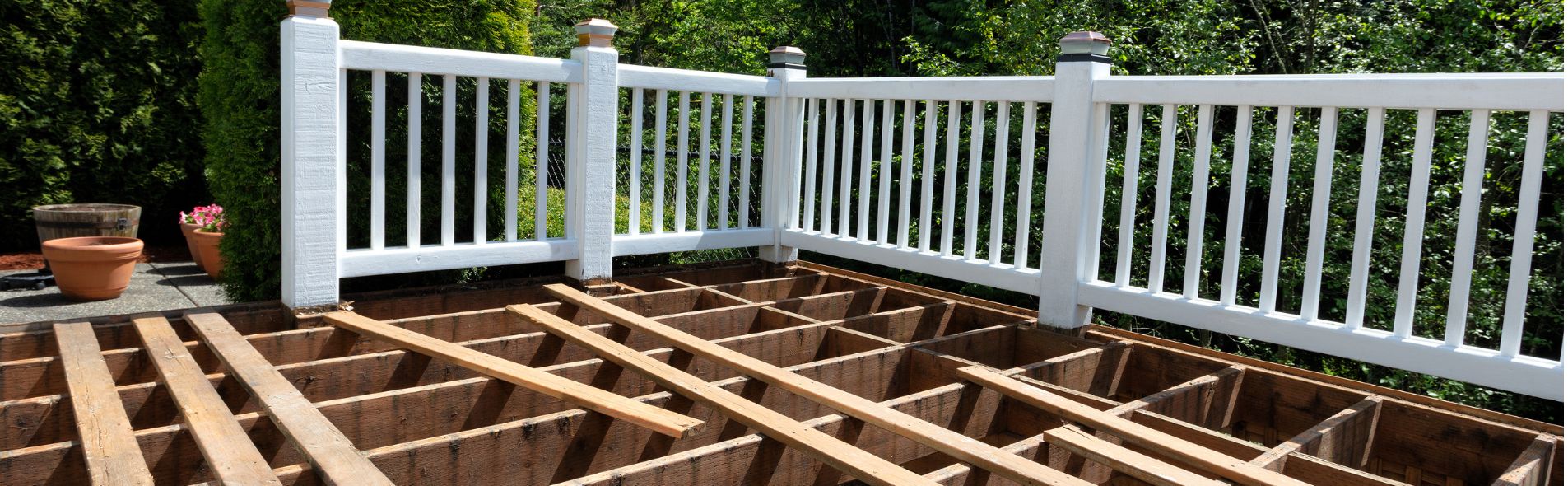
- Joists and beams: Rot or pest damage to the structural framing underneath the decking surface is not always visible from above, but it determines whether the deck can safely support the load placed on it.
- Decking boards: Surface board condition is more cosmetic than structural in most cases, but significant rot that extends through the board and into the framing beneath is a different matter.
If the structure is sound, surface and cosmetic repairs can extend the life of a deck significantly. If the structure is compromised, repairs to the surface are money that would be better spent on a replacement.
Signs That Repair Is the Right Call
When the Deck Has More Life in It
Repair is generally the right answer when:
- The structural framing, posts, ledger, and footings are in good condition
- Surface boards are worn, cracked, or showing age but are not structurally compromised
- The deck is relatively new, and the issue is cosmetic or maintenance-related
- A specific component such as the railing system, stairs, or a section of decking has failed, but the rest of the structure is solid
- The deck was originally built well and has been maintained reasonably over its life
Common repair scenarios include replacing worn decking boards while keeping the existing frame, rebuilding a railing system that has deteriorated, addressing a specific section of rot that has not spread to structural members, and refinishing or sealing a deck that has been neglected but is otherwise intact.
Signs That Replacement Is the Right Call
When Repair Does Not Make Economic Sense
Replacement is generally the right answer when:
- Structural components including the ledger, posts, joists, or beams show significant rot, pest damage, or deterioration
- The deck was built without proper footings or is settling unevenly
- The framing lumber is nearing or past the end of its useful life and would require extensive replacement to address properly
- The cost of repair approaches or exceeds a significant fraction of the replacement cost
- The deck’s design no longer works for how the household wants to use it
- The deck is an older pressure-treated structure that was built before safer treatment standards were adopted
According to the North American Deck and Railing Association, deck failures are most commonly attributed to improper ledger connections and deteriorated structural members, both of which are difficult to address through surface-level repair. If these components are compromised, replacement is the structurally responsible choice.
Choosing the Right Material for Your New Deck in Missouri
Pressure Treated, Composite, or Something Else
If replacement is the right call, material selection is the next major decision. Missouri’s climate makes some materials perform better than others over time.
Pressure-treated lumber remains the most affordable deck material and performs well in Missouri’s climate when properly maintained. It requires periodic sealing or staining to maintain appearance and resist moisture damage. Modern pressure-treated lumber uses safer treatment chemicals than older formulations.
Composite decking has become increasingly popular because it eliminates most of the maintenance requirements of wood. It does not rot, warp, or splinter, and it maintains its appearance without regular staining or sealing. The upfront cost is higher than pressure-treated wood, but the lower maintenance cost over time often makes it the better long-term investment for many Missouri homeowners.
Cedar and redwood are naturally rot-resistant options that offer a premium natural wood appearance but require more maintenance than composite and more investment than pressure-treated lumber.
We help clients work through this decision based on their budget, their appetite for ongoing maintenance, and the aesthetic they are going for. There is no universally right answer, but there is usually a right answer for a specific homeowner and situation.
What a New Deck Costs in Mid-Missouri
Setting Realistic Expectations
Deck replacement costs in Mid-Missouri depend on the size of the deck, the material selected, the complexity of the design, and whether any site work or footing replacement is required.
Material costs vary significantly between pressure-treated wood and premium composite options. Design complexity, including multiple levels, built-in features, custom railing systems, and stairs, adds cost beyond a straightforward rectangular deck.
Nova Construction provides detailed quotes so clients understand exactly what they are investing in before any work begins. We also help clients think through where to invest and where to save based on their priorities and timeline. Contact us to schedule a free assessment and quote.
FAQ About Deck Repair vs. Replacement in Missouri
How do I know if my deck is structurally safe?
Signs of structural concern include visible rot at posts, ledger board connections, or joists; uneven decking or bouncing when you walk across it, loose railing connections; and deck movement when load is applied. If you are unsure, a professional assessment is the safest next step.
How long does a pressure-treated deck last in Missouri?
A properly built and maintained pressure-treated deck can last 15 to 25 years in Missouri’s climate. Composite decks typically carry warranties of 25 years or more.
Is it cheaper to repair or replace a deck?
It depends entirely on the condition of the existing structure. Repair is cheaper when the structure is sound. Replacement is more cost-effective when structural repair costs are approaching or exceeding a meaningful fraction of replacement cost.
Do I need a permit to replace a deck in Missouri?
Most deck replacement projects require a building permit in Missouri municipalities. Nova handles the permitting process as part of the project.
Can Nova build a deck with multiple levels or a covered structure?
Yes. We build decks ranging from simple single-level platforms to multi-level outdoor living spaces with pergolas, covered areas, and built-in features. Explore our decks, porches, and sunroom services to see what is possible.
Let’s Take a Look at Your Deck
Free Assessment, Honest Recommendation
Whether your deck needs a repair or a full replacement, the right starting point is an honest assessment from a contractor who will tell you what the structure actually needs rather than defaulting to the more expensive option.
Contact Nova Construction and Remodeling for a free deck assessment, or call (573) 219-7326 and let’s figure out what your deck actually needs.